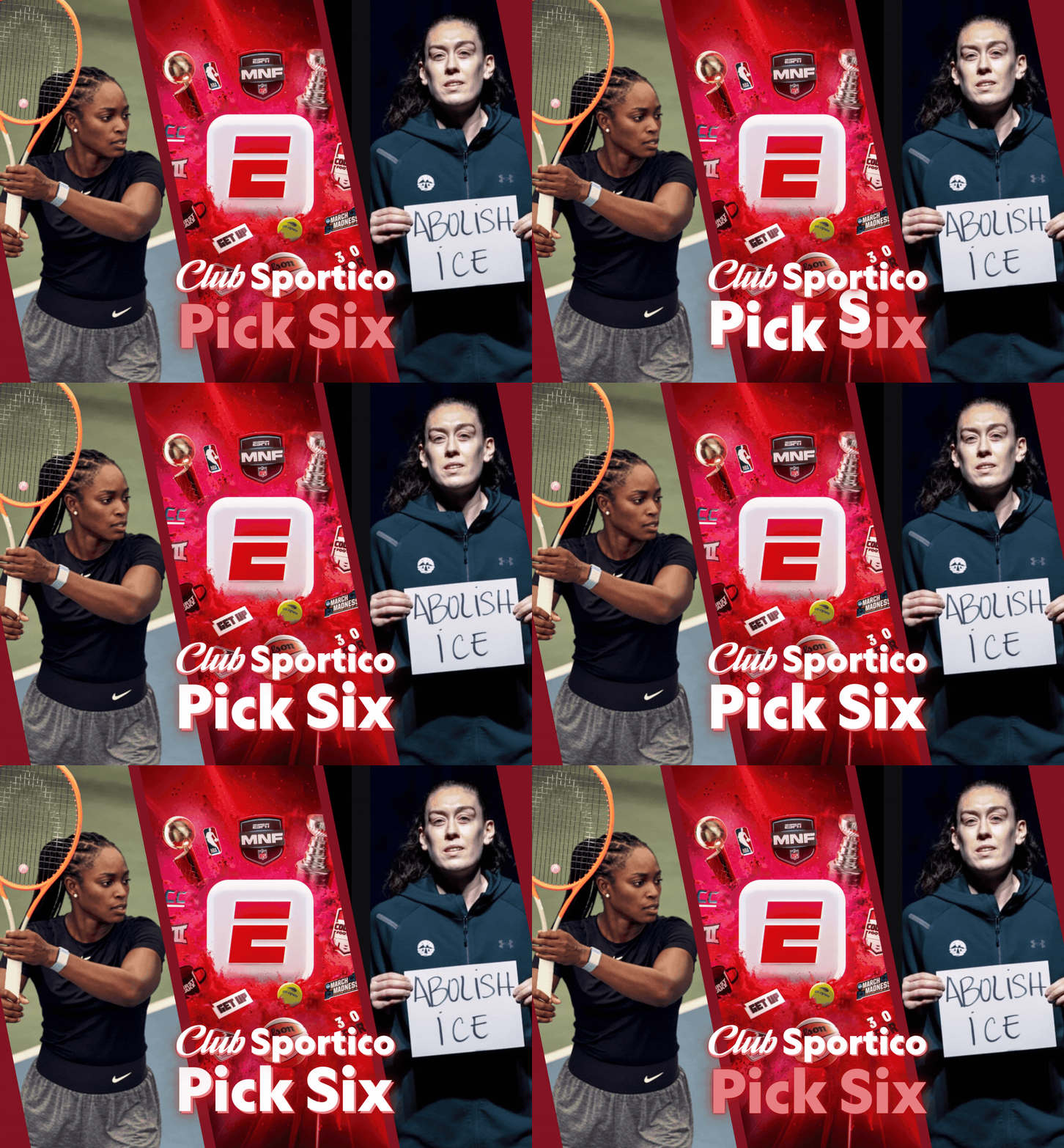
ESPN is showing you what's coming
Plus: Judicial capture, an Olympic travesty, data wars, and more.
As we all dig ourselves out of this snowstorm, here are six sports business items worthy of your attention at the start of the week…
What made me frustrated 🎾: If you’re an American that loves tennis, there’s a good chance you’re disappointed with ESPN’s coverage of the the Australian Open. Matches are spread across at least two—and in my case, three—different tiers of service, creating new layers of confusion and restrictions. I’m a YouTubeTV and ESPN+ subscriber and am still barred from watching a good amount of tennis that’s been designated to ESPN Unlimited, ESPN’s new direct-to-consumer streaming product.1 Perfectly clear, right?
It feels like a bit of a rug pull, and people are upset.
This Australian Open is a trial balloon of sorts for ESPN, which is constantly reevaluating its distribution to maximize the value of its sports rights. And unfortunately, convenience for users takes a bit of a back seat in that calculus. Here’s what an ESPN exec told Jacob.
ESPN Unlimited currently costs $30 per month—a price that will surely grow after the honeymoon launch period. That service may soon be required for folks (like me) that have grown accustomed to ESPN+ and its nearly bottomless array of games. In fact, it appears ESPN+—which was recently rebranded as ESPN Select?—is likely on its way out entirely, further evidence that this future of disaggregated media is going to be way more expensive for everyone.
What intrigued me 🩺: Three of tennis’s biggest stars—Carlos Alcaraz, Jannik Sinner and Aryna Sabalenka—have been forced to remove their wearable biometric trackers at the Australian Open. These Whoop bands have become a mainstay for athletes of all types, and have been approved for years by both the ATP and WTA tours, just not the Grand Slams.
Whoop responded quickly, framing this as a player health issue. “Athletes,” the company said, “have a fundamental right to understand their own performance and health.” I agree, but my gut tells me this is more about the commercialization of some of that data. Whoop occasionally publishes the heart rate info from its star endorsers in their biggest games—like this from Patrick Mahomes in the NFL playoffs. If the tennis slams believe that’s some sort of rights infringement, I’m here for the debate.
What made me sad 🗞️: The Washington Post told staffers late last week that the newspaper would not be sending any reporters to the Winter Olympics in Italy next month. That’s despite the Post having already committed to a reported $80,000 in housing costs. The paper typically sent 10-20 reporters to the Olympics, and had received 14 credentials for the Milan Cortina edition.
It appears layoffs are imminent at the paper, which is owned by the world’s third richest man. It’s a depressing result in all the ways—bad for journalism, bad for journalists, bad for an informed public, and much lower on the list, bad for fans of the Olympics.2
What made me laugh ⛷️: I’m obsessed with the cheating scandal that has rocked ski jumping on the eve of the Olympics. Multiple Norwegian jumpers were caught competing with extra material sewn into the crotch of their skinsuits, giving them better loft. It has cracked the formidable reputation of the Winter Games’ most dominant nation, and forced a rule change for competition in Italy next month. There’s even secret video of the sewing!
Call me childish, but there’s something very funny to me about a sport’s best athletes earning personal and national embarrassment for making their crotch look bigger in competition.
Sportico (and non-Sportico) stories of the week ⚖️: The NCAA’s biggest athletic departments have long used local lawmakers and politicians to help advance their goals. Are judges the next frontier?
Last week our colleague Daniel Libit reported that the judge who denied Duke’s temporary restraining order in its legal battle with star quarterback Darian Mensah is married to a university librarian and has Blue Devils basketball season tickets. A few days later, Front Office Sports reported that the Tuscaloosa judged who ruled a controversial Alabama basketball player immediately eligible is an active donor to the Crimson Tide athletic department.
As courts become increasingly influential in shaping the future of college sports—handling macro antitrust cases as well as lawsuits involving individual player eligibility—it appears judicial conflicts are going to become a feature of the system.
What made me proud ✊: The sports world has been predictably quiet following the fatal shooting of another U.S. citizen by federal agents in Minnesota. But kudos to WNBA star Breanna Stewart, who straddled no fences before her Unrivaled game on Sunday afternoon.
Club Sportico is a community organized by Sportico, a digital media company launched in 2020 to cover the business side of sports. You can read breaking news, smart analysis, and in-depth features from Eben, Jacob and their colleagues at Sportico.com, and listen to the Sporticast podcast wherever you get your audio. Contact us at club@sportico.com.
ESPN Unlimited is coming for YouTubeTV subscribers, but it’s unclear when.