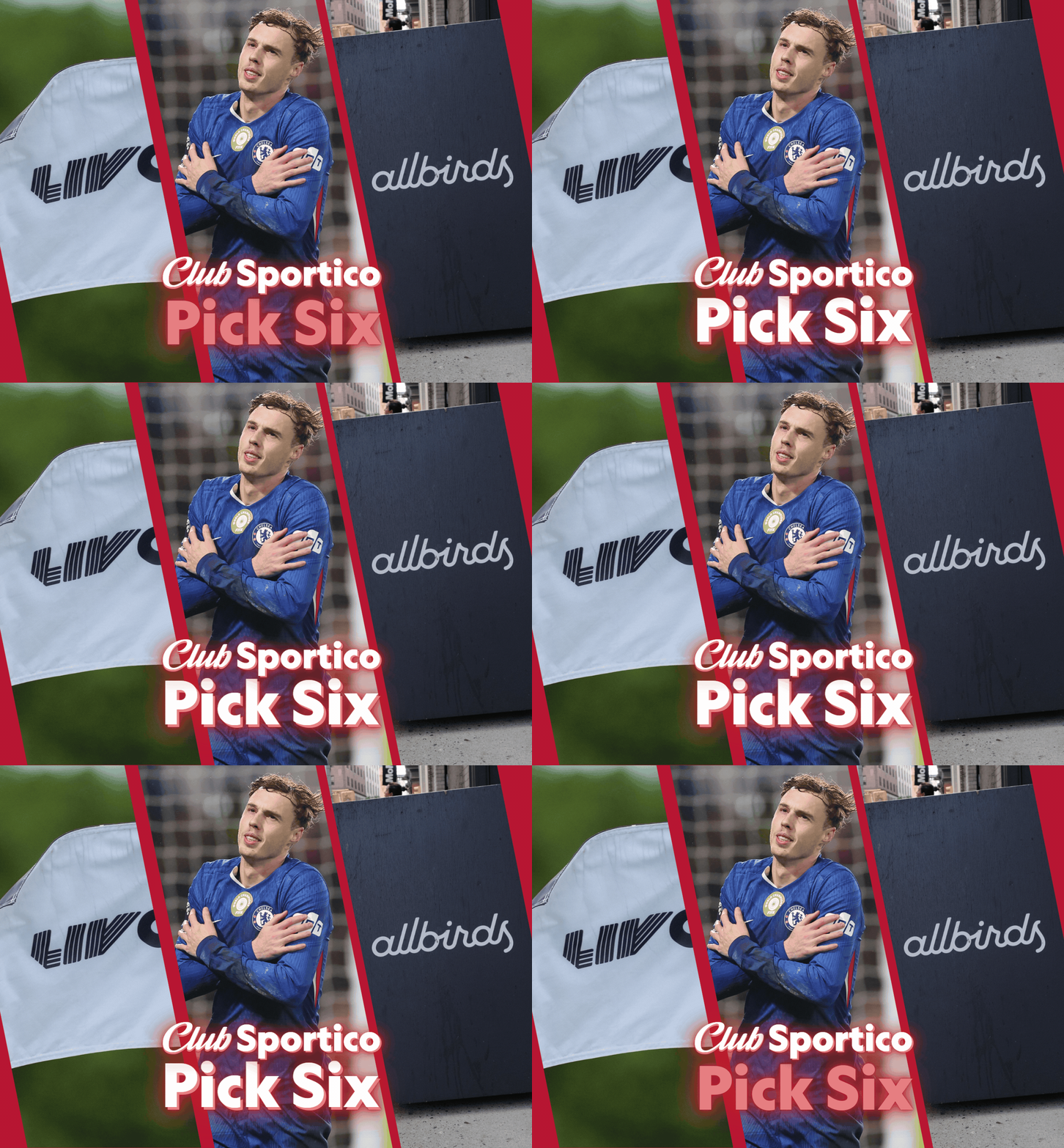
LIV And Let... Live?
Plus: The Iran war is impacting sports, Chelsea's risky financial gamble, and a shoe company's AI computing pivot.
This week’s Pick Six is actually a Pick Seven, because… Mondays.
Non-Sportico Story of the Week ⛳: The biggest sports business story of the past week was the defunding—or depending on where you get news: the demise? the mocking? the ???—of Saudi-backed LIV Golf. It started with a very vague Twitter post, then snowballed into rush of nearly-identical news stories, obits and takes. If you’re curious at all about what’s actually happening at LIV, I recommend this Twitter article (!?) from X user @ParandPaddock, which takes a much softer and more realistic view. LIV Golf isn’t going away, at least not anytime soon, but there are some major financial problems that need to be solved quickly.
By the way, in an extra dose of irony, LIV’s next event is in two weeks in Washington DC at… you guessed it, Trump National Golf Club. Yes, the man who has destabilized the entire Middle East, at least temporarily, is hosting LIV for what will undoubtedly be a media frenzy of questions about Saudi Arabia.
Sportico Story of the Week 🛢️: LIV Golf’s financial backer, the Saudi sovereign wealth fund PIF, has committed untold billions to global sports over the past decade. Thanks to PIF and other sovereign money from Qatar and the UAE, the Middle East has become critical to the sports economy. Now, there are signs that the Iran war could change that spending1, with examples popping up in soccer, golf, basketball, tennis, and even flag football. I wrote a column on Thursday diving into the dynamics on the ground, and the huge consequences that could follow.
What Made me Gasp 📉: It’s no secret that Chelsea FC’s newish American owners have put the club into a bit of financial distress. But I had no idea how deep the hole was until I read this excellent financial analysis from Paul Quinn’s soccer blog.
It’s worth a full read, but in short, Chelsea’s massive uptick in spending—which is yet to really produce on the field—is backed by a very risky financial loan that the team chose to structure with a payment-in-kind (PIK) mechanism. Instead of paying down the debt via set interest payments, the soccer club is adding the interest to the outstanding principal balance, which creates what Quinn calls “a deferred but mathematically explosive liability.”
What Made me Laugh 👟: Last week Allbirds, a once-hot sneaker startup, announced it was fully pivoting its business. It will no longer make the soft, trendy cloth sneakers that made the company worth—briefly, more than $4 billion.2 Instead it raised money to pivot to AI computing.
The news inspired this Tweet 👇
Speaking of stock charts, the market has (so far) loved Allbirds’ new move. Here’s the (Nasdaq: BIRD) three month price movement 👇
Sportico Thread of the Week 📺: On Saturday, Jacob took to Twitter to explain a question that’s bubbling up more and more as sports streamers secure rights to major sporting events—How do bars handle games on Netflix, YouTube, Apple TV or Prime Video? Turns out it involves two main competitors, fire code occupancy, special training and, and of course, a private equity firm. Here’s a snippet3 👇
What I Don’t Understand ⚽: What’s happening at Tottenham Hotspur. Over the past decade, Spurs forced their way into the newly-constituted “Big Six”4 in English soccer—the clubs that had reached a point of global popularity and financial heft that virtually insured they could never be bad enough to be relegated. Well… with five games left in the season, Tottenham is currently sitting in relegation position, despite having international soccer’s 14th largest payroll, an astounding $187 million. Relegation could easily cost the club a hundred million, and that doesn’t count the myriad ways it might impact the potential sale of the club, which has been rumored for years.
As a potential explanation, I was fascinated by this ESPN story about how the club may be the product of bad analytics.
What I Do Understand ⚾: The Padres are about to sell for $3.9 billion, the highest price (by far) ever paid for control of a baseball team5. Why are the Padres worth $3.9 billion?? There are a few things that make the club a bit of a unicorn in major U.S. sports. It’s a rare baseball team that has neither an NFL nor NBA franchise in its city, and it is profitable despite losing its local TV partner to bankruptcy. The Padres were second in attendance last year, trailing only their big-spending blue rivals to the north. Plus, the looming labor battle could bring an MLB salary cap, which would make every team worth a lot more. Read more here from our colleagues Kurt and Justin 👇
Club Sportico is a community organized by Sportico, a digital media company launched in 2020 to cover the business side of sports. You can read breaking news, smart analysis, and in-depth features from Eben, Jacob and their colleagues at Sportico.com, and listen to the Sporticast podcast wherever you get your audio. Contact us at club@sportico.com.
Allbirds sold the shoe part of its business for $40 million to “brand management company” American Exchange Group.
That’s Manchester United, Manchester City, Liverpool, Chelsea, Arsenal and Tottenham.
The prior record was the $2.4 billion that Steve Cohen paid for the Mets.
stories, obits and takes. If you’re curious at all about what’s actually happening at LIV, I recommend this Twitter article (!?) from X user @ParandPaddock, which takes a much softer and more realistic view. LIV Golf isn’t going away, at least not anytime soon, but there are some major financial problems that need to be solved quickly.
By the way, in an extra dose of irony, LIV’s next event is in two weeks in Washington DC at… you guessed it, Trump National Golf Club. Yes, the man who has destabilized the entire Middle East, at least temporarily, is hosting LIV for what will undoubtedly be a media frenzy of questions about Saudi Arabia.
Sportico Story of the Week 🛢️: LIV Golf’s financial backer, the Saudi sovereign wealth fund PIF, has committed untold billions to global sports over the past decade. Thanks to PIF and other sovereign money from Qatar and the UAE, the Middle East has become critical to the sports economy. Now, there are signs that the Iran war could change that spending1, with examples popping up in soccer, golf, basketball, tennis, and even flag football. I wrote a column on Thursday diving into the dynamics on the ground, and the huge consequences that could follow.
What Made me Gasp 📉: It’s no secret that Chelsea FC’s newish American owners have put the club into a bit of financial distress. But I had no idea how deep the hole was until I read this excellent financial analysis from Paul Quinn’s soccer blog.
It’s worth a full read, but in short, Chelsea’s massive uptick in spending—which is yet to really produce on the field—is backed by a very risky financial loan that the team chose to structure with a payment-in-kind (PIK) mechanism. Instead of paying down the debt via set interest payments, the soccer club is adding the interest to the outstanding principal balance, which creates what Quinn calls “a deferred but mathematically explosive liability.”
What Made me Laugh 👟: Last week Allbirds, a once-hot sneaker startup, announced it was fully pivoting its business. It will no longer make the soft, trendy cloth sneakers that made the company worth—briefly, more than $4 billion.2 Instead it raised money to pivot to AI computing.
The news inspired this Tweet 👇
Speaking of stock charts, the market has (so far) loved Allbirds’ new move. Here’s the (Nasdaq: BIRD) three month price movement 👇
Sportico Thread of the Week 📺: On Saturday, Jacob took to Twitter to explain a question that’s bubbling up more and more as sports streamers secure rights to major sporting events—How do bars handle games on Netflix, YouTube, Apple TV or Prime Video? Turns out it involves two main competitors, fire code occupancy, special training and, and of course, a private equity firm. Here’s a snippet3 👇
What I Don’t Understand ⚽: What’s happening at Tottenham Hotspur. Over the past decade, Spurs forced their way into the newly-constituted “Big Six”4 in English soccer—the clubs that had reached a point of global popularity and financial heft that virtually insured they could never be bad enough to be relegated. Well… with five games left in the season, Tottenham is currently sitting in relegation position, despite having international soccer’s 14th largest payroll, an astounding $187 million. Relegation could easily cost the club a hundred million, and that doesn’t count the myriad ways it might impact the potential sale of the club, which has been rumored for years.
As a potential explanation, I was fascinated by this ESPN story about how the club may be the product of bad analytics.
What I Do Understand ⚾: The Padres are about to sell for $3.9 billion, the highest price (by far) ever paid for control of a baseball team5. Why are the Padres worth $3.9 billion?? There are a few things that make the club a bit of a unicorn in major U.S. sports. It’s a rare baseball team that has neither an NFL nor NBA franchise in its city, and it is profitable despite losing its local TV partner to bankruptcy. The Padres were second in attendance last year, trailing only their big-spending blue rivals to the north. Plus, the looming labor battle could bring an MLB salary cap, which would make every team worth a lot more. Read more here from our colleagues Kurt and Justin 👇
Club Sportico is a community organized by Sportico, a digital media company launched in 2020 to cover the business side of sports. You can read breaking news, smart analysis, and in-depth features from Eben, Jacob and their colleagues at Sportico.com, and listen to the Sporticast podcast wherever you get your audio. Contact us at club@sportico.com.
Allbirds sold the shoe part of its business for $40 million to “brand management company” American Exchange Group.
That’s Manchester United, Manchester City, Liverpool, Chelsea, Arsenal and Tottenham.
The prior record was the $2.4 billion that Steve Cohen paid for the Mets.