

Fiesta in the Finals? It's Not Black and White
We talked to the NBA to get the league's perspective on alternate uniforms during the playoffs, and whether the home whites tradition could ever return.

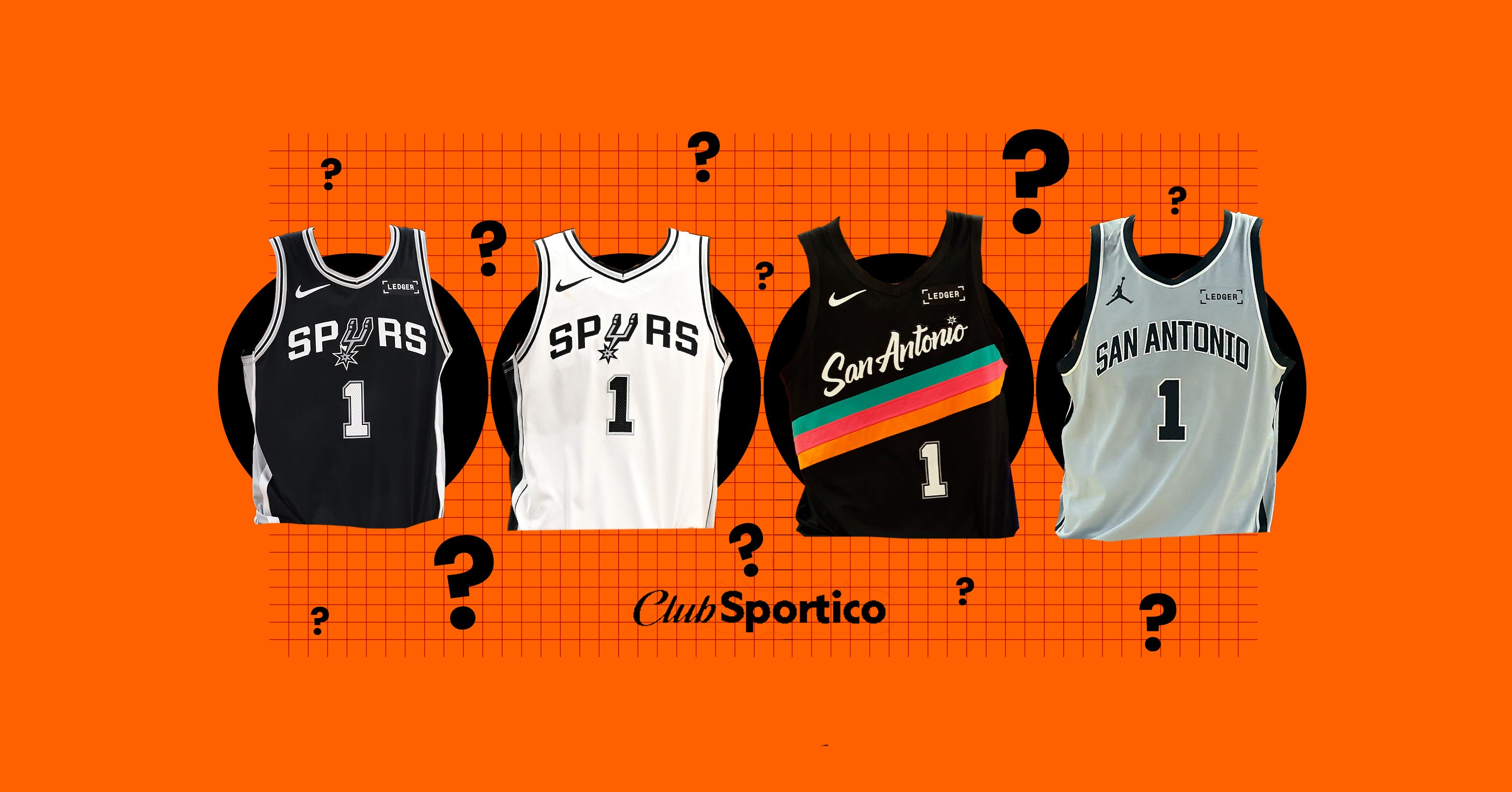
Welcome back to Club Sportico, where we discuss the intersection of sports and money—with humor and opinion. Today we’re talking about colors 🎨.
The San Antonio Spurs opened the NBA Finals at home with another glorious Fiesta night. Just as they’d done in previous rounds, fans wore the team’s 1990s “Fiesta” shades, divided into tangerine, fuchsia and turquoise sections of the arena, to create an awesome visual.


But, unlike in the first two rounds, the team itself was not dressed as colorfully. Despite being cheered on by a giant sherbet menu, the Spurs wore their traditional black instead of their Fiesta jerseys. This wasn’t a surprise—Sportico explained back in April that the NBA requires teams to wear their “primary uniforms” in the conference finals and Finals.
The league’s priorities, though, seemed contradictory to me. If the NBA wants a more classic look for the higher-profile later rounds, then why allow the Spurs to wear black at home, when home teams typically wore white for the league’s first 70 years?
I talked to Christopher Arena, the NBA’s SVP of on-court and brand partnerships, to get his perspective.
First, some background info. Before the 2017-18 season, Nike took over the NBA’s uniform business from Adidas. The company scrapped the whole concept of home/road jerseys and implemented a new naming system for uniforms:
Association: a white jersey
Icon: a dark jersey
Statement: an alternate color jersey
City Edition: changes annually, no color restrictions
Classic: a throwback jersey
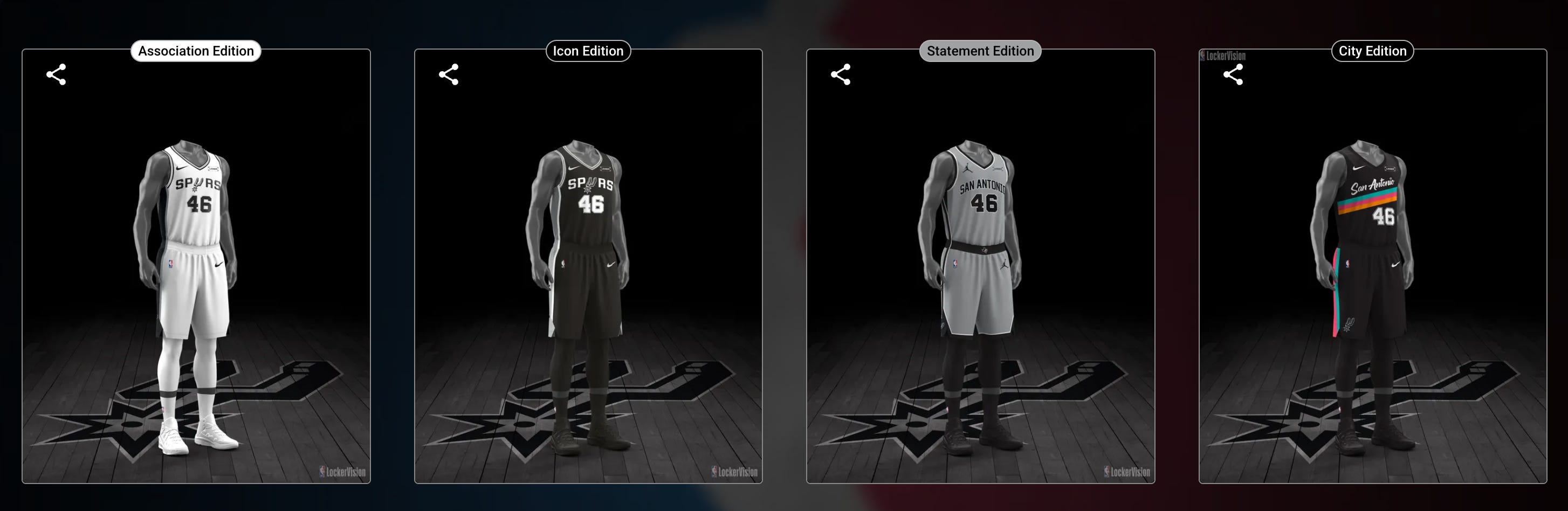
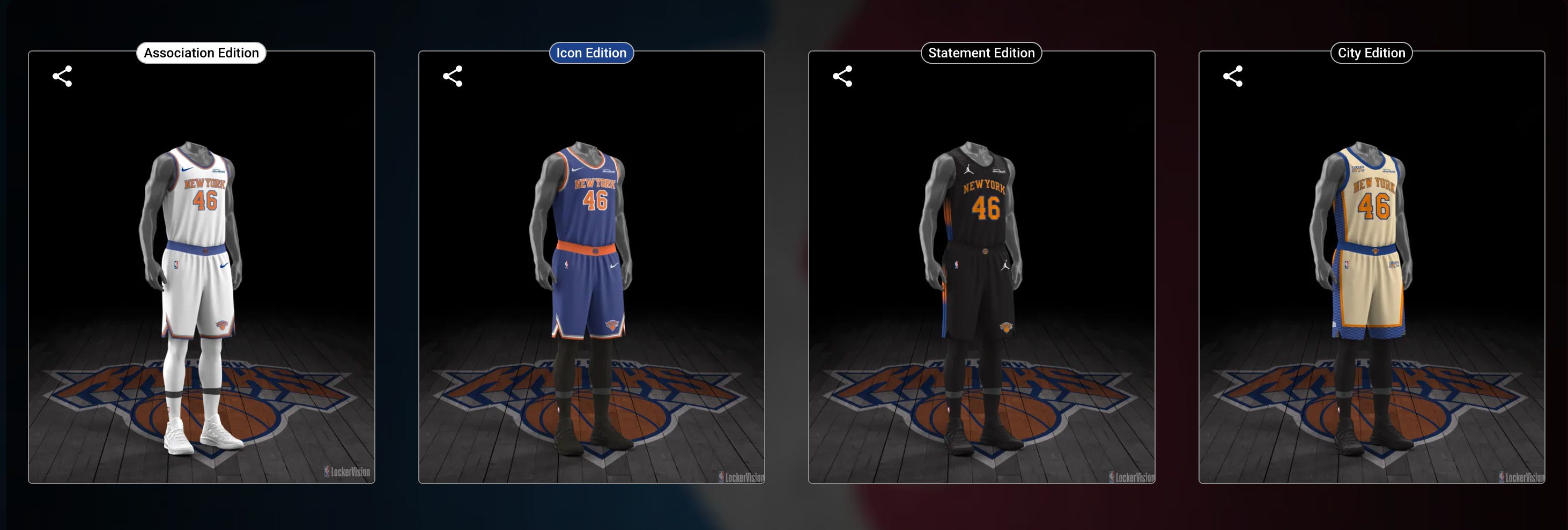
The first three—Association, Icon and Statement—are all considered part of the “core” and are fair game for the Conference Finals and Finals. The Knicks’ black jersey is their Statement, so they wore that against the Cavs in Game 2. The Spurs’ Fiesta uniform is their City Edition, however, so it’s off limits. I would argue the latter has more connective tissue with its team’s “core” identity than the former, but apparently the NBA’s policy is as much for practical reasons as it is about vibes.
“Classic Edition uniforms and City Edition uniforms are one-year uniforms… and so by the end of the season in May or June, in most cases, a retailer globally or domestically or even the team shop is probably sold out of that,” Arena said. “It becomes a harder fan experience to get caught up in this frenzy and then not be able to participate in it by buying a jersey.”
In this new era, the home team gets to choose its uniform, then the road team then chooses one that’s sufficiently contrasting.
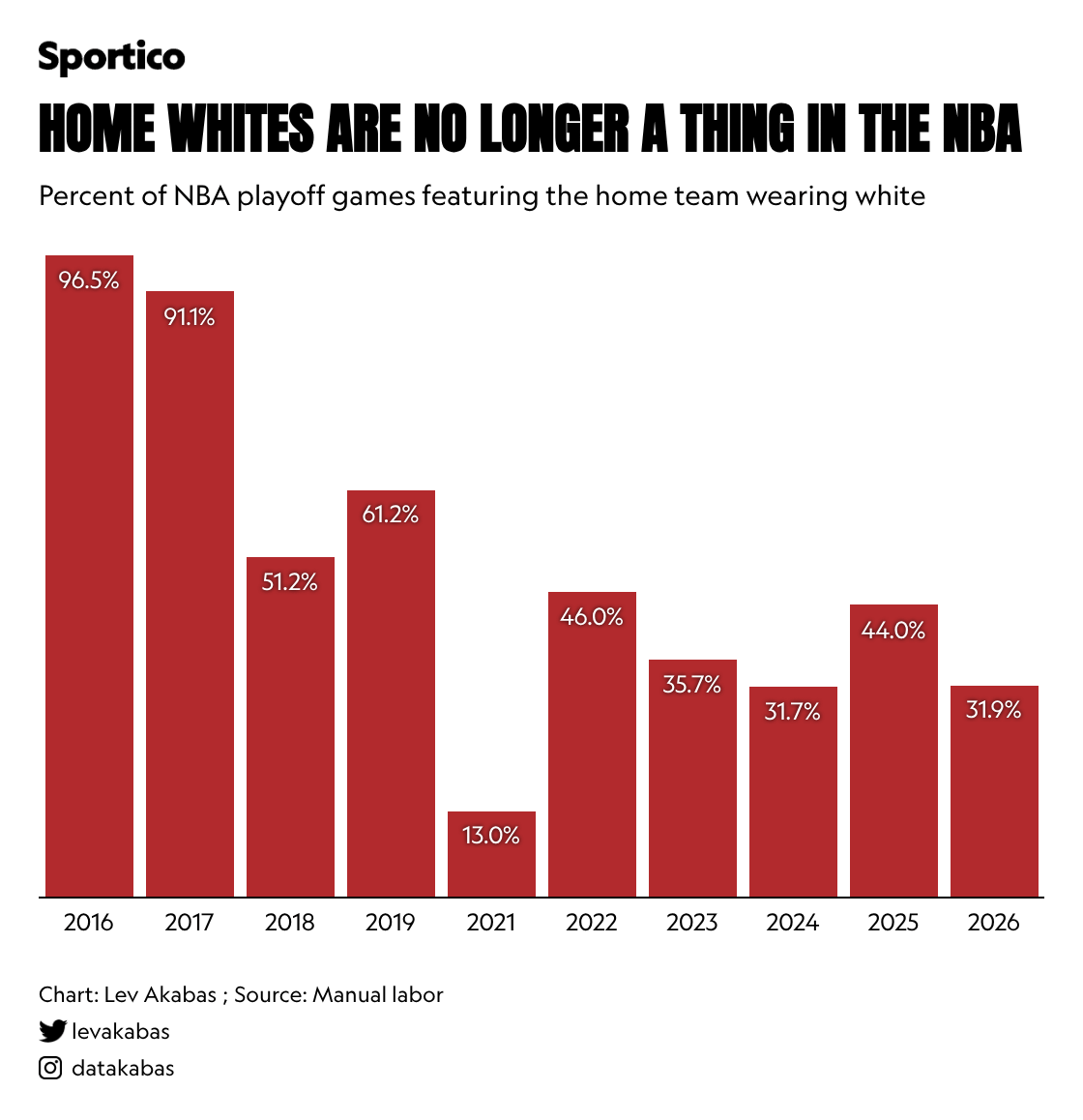
That naturally led to a degradation, and later a complete abandonment, of the home whites tradition. In the 2017 playoffs, 91% of games featured a home team wearing white. That dropped to 51% the following year. By 2021, it was down to 13%, when teams like the Phoenix Suns and Utah Jazz decided to exclusively go with City Edition at home. That postseason, we saw more home teams wearing black with a strip of a fiery color gradient than wearing white.
Alternate jerseys began appearing more frequently on the league’s biggest stage. I actually didn’t mind Phoenix and Utah committing to one special uniform for an entire playoff run (wouldn’t mind seeing this for San Antonio with Fiesta at some point), but other teams in the early 2020s would swap their color schemes game-to-game, which created a visual mess.
The trend hit a particular low point in the 2024 Finals when the Dallas Mavericks wore black alternates for Game 1, followed by the Boston Celtics wearing their black alternates for Game 2, causing potential confusion for casual fans (I also think the Celtics’ black unis should be put in a cannon and fired into outer space, but that’s besides the point).
That’s when the league stepped in with its aforementioned late-round policy, which was a smart move.
This postseason, still, only 32% of games have featured home teams in white. Many fans, including several with millions of social media followers, have voiced a desire for that number to be up in the 90s… just like it was in the 90s.
The dilemma for the league, however, is that teams have now introduced so many alternate jerseys (up to four at a time, including one new one each year). Showcasing those jerseys to an away crowd makes no sense from a merchandise and marketing perspective.
“There’s something about world-building as a team hosts a game that they can tell a story wearing whichever uniform they’re wearing,” Arena said. “If in the early rounds, that’s about City Edition and Fiesta and doing t-shirt giveaways that paint the crowd, great. If that’s about a more traditional team like the Knicks and they just want to wear white at home, that’s great too.”
This approach has its drawbacks. I told Arena about watching games with my mom, who usually has to ask me which team is at home, because, in her defense, it’s not obvious! Take a look at Cavs vs. Pistons Game 3, with fans committed to wearing white T-shirts to support their team.
Just one problem. The opposing team was wearing white. Oops!
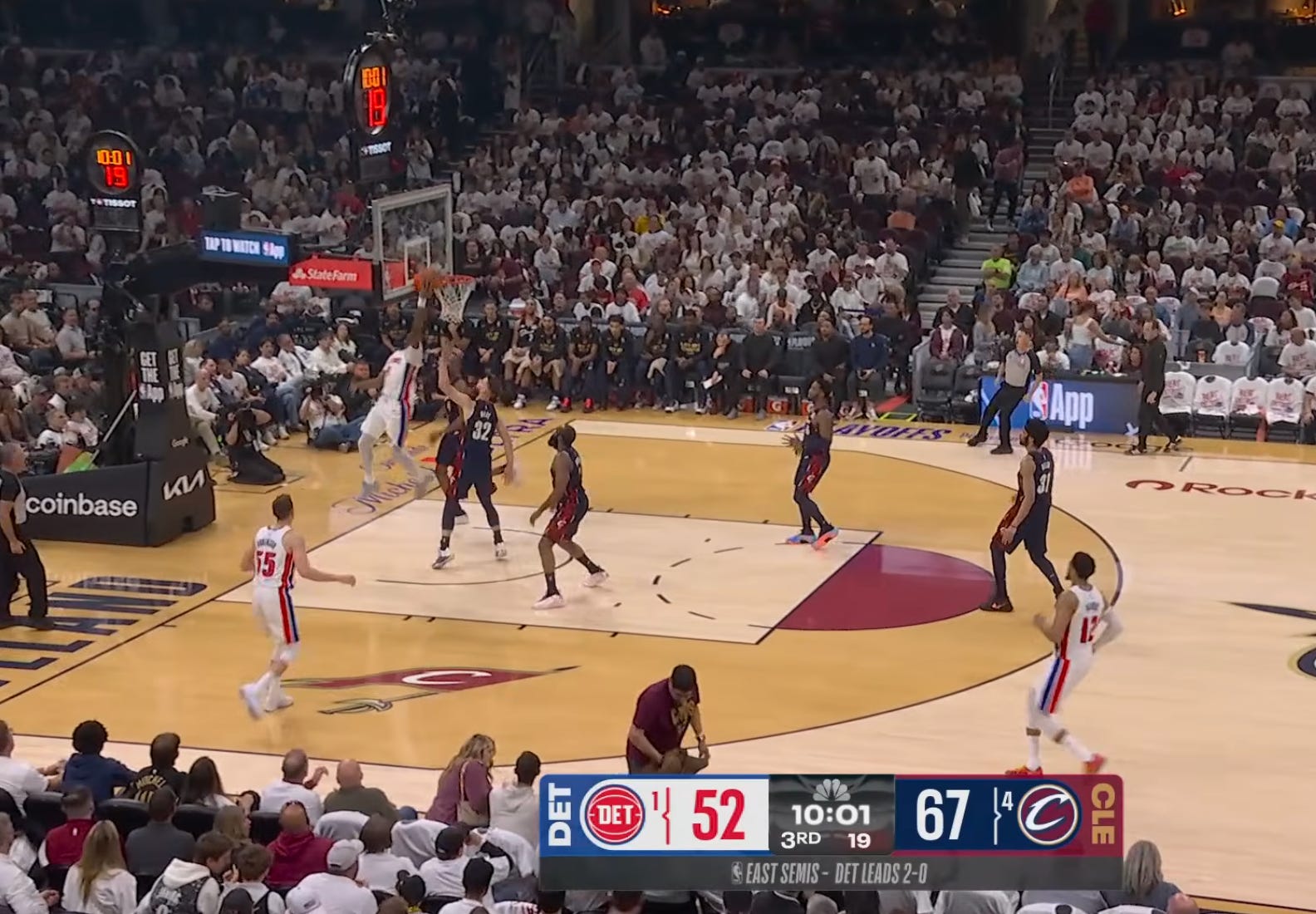
“With all due respect to your mom… it does take maybe 30 seconds to simply look at the court… and orient yourself as to where you are,” Arena said. “We don’t think it’s a major leap to orient yourself… fairly quickly.”
That’s fair. But there are other good arguments for home whites. Arena’s dad used to explain to him that it’s nice for fans to see all the different colors from visiting teams throughout the season. After all, the home team’s colors are already on the court, whereas the uniform is the only way for the away team’s colors to shine.
For me, it simply feels wrong to turn on a game and see the road team in white. Watching any tip-off reminds me of the joy from when I was a kid and my parents would let me stay up a little late to catch the first quarter. Perhaps even subconsciously, the visual cue of home whites and road colors hits different for me. Nostalgia is real!
But maybe it’s not a big deal. Sure, the Knicks wearing white in San Antonio on Wednesday night initially irked me. Admittedly, though, by the time Brunson hit an impossible fadeaway jumper over Devin Vassell and I knew I was about to witness my first ever Finals win as a sentient Knicks fan, my enjoyment of the game was not affected by the uniform colors.
And yet, my concern with the current era of jersey chaos is more long-term.
I have such a clear mental image of iconic NBA moments—take Michael Jordan’s game winner against the Jazz in 1998, for instance—because I don’t have to think about which uniforms were worn.
That’s not the case anymore. What color was Giannis Antetokounmpo wearing for his epic block on Deandre Ayton in the 2021 Finals? Couldn’t tell you. The Bucks wore a different jersey for every home game in that series!
Here’s a similar take from media personality Rob Perez on X:
“Every NBA game that’s played where the home team is not wearing white is a papercut to the sport’s tradition…
The sales spreadsheet may suggest that this new jersey strategy is working because so many people are buying them, but what they are sacrificing to achieve these short-term results is the legacy of the sport that made them so cool in the first place.”
The league does recognize the importance of history—it’s one reason City Edition jerseys are no longer allowed late in the playoffs. The Toronto Raptors and Denver Nuggets clinched the 2019 and 2023 Finals, respectively, wearing alternates that debuted in those particular seasons and are no longer worn. The NBA understood that this wasn’t ideal.
“When you get to these big, call it trophy, t-shirt, hat moments… there’s something about seeing the teams in their core identities and fans connecting to that,” Arena said.
Don’t expect the home whites tradition to come back, but towards the end of our conversation, Arena seemed open to the idea of having some “dividing line” to distinguish certain games when teams would have to wear white at home.
“You could do just the Finals. You could do conference finals and Finals. You could do all the playoffs, including the play-in. You know, you could do Friday night games,” Arena said.
Arena did note that the Emirates NBA Cup actually does have its own tradition of sorts, with road teams always wearing white, so as not to clash with the Cup courts. I’m open to new traditions, as long as there’s some semblance of consistency!
There are far more important problems facing the NBA—tanking, integrity, and refereeing to name a few—but home whites for at least the Finals seems like an easy change, if fans pushed for it. Online complaints during the 2025 Finals essentially bullied the NBA into putting the giant image of the Larry O’Brien trophy back on the court this year for the first time since 2009, and it is absolutely glorious.
In the meantime, we’re about to get three straight games of home whites 🙂. Sit back, relax, and enjoy the show!
Sincerely,
A young man yelling at a cloud
Eben’s 🔥 Take: I’d be curious to know whether a team wearing a specific jersey on the court actually impacts the sale of those jerseys off the court. My cursory understanding of jersey economics is that white jerseys are less and less popular in fan shops. If wearing a specific jersey is actually a sales driver, that might also help explain why teams are shifting away from wearing white in big games.

Club Sportico is a community organized by Sportico, a digital media company launched in 2020 to cover the business side of sports. You can read breaking news, smart analysis, and in-depth features from Eben, Jacob and their colleagues at Sportico.com, and listen to the Sporticast podcast wherever you get your audio. Contact us at club@sportico.com.