The NFL Draft is Getting Older. No One Told the Giants
College player compensation (and a COVID bonus year) have re-shaped pro football's pool of available players... but Big Blue just picked a pair of 20-year-olds.
Welcome back to Club Sportico, where we discuss the intersection of sports and money—with humor and opinion. Today we’re talking about whether age is just a number.
Everyone knows that college football has been up-ended in recent years. Player compensation (revenue sharing, plus NIL deals), thousands of transfers, and an extra year of eligibility following the COVID-19 pandemic reshaped roster-building strategies across the country. More quietly, those same changes have also altered the NFL.
100+ players used to leave college early to enter the draft each year. Now fewer than 70 do. Ravens GM Eric DeCosta said that four percent of prospects on the team’s draft board before 2024 were 24.5 or older. “Now that number is up to 18 percent,” he said. “Historically we’ve tried to draft younger players when we can... That’s going to change the way we target players.”
On Thursday, the Los Angeles Chargers selected 25-year-old Akheem Mesidor 22nd overall, the oldest first-rounder since 2018.
But the New York Giants have gone in the other direction.
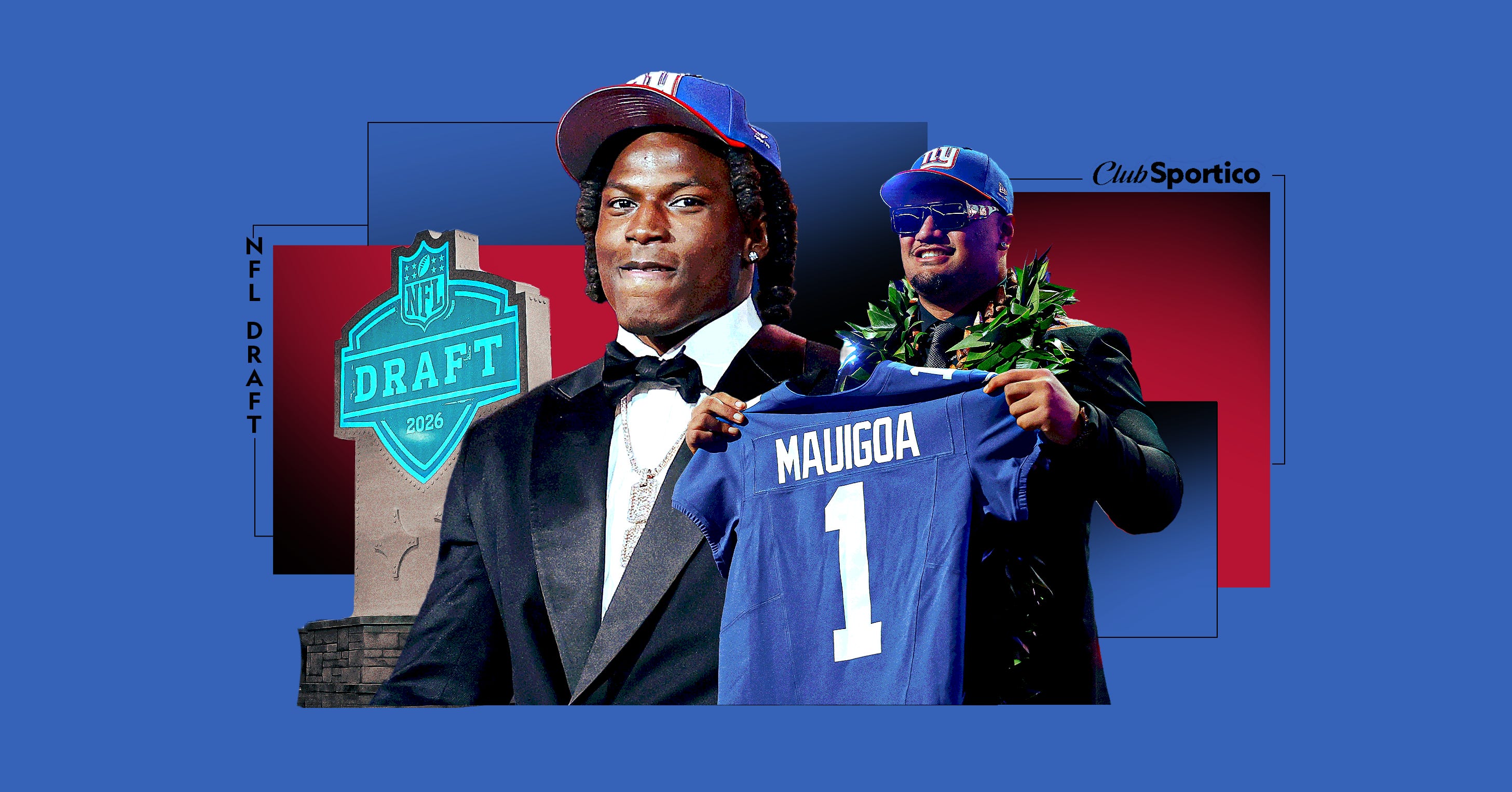
5th overall pick: Arvell Reese, LB, Ohio State, 20 years old
10th overall pick: Francis Mauigoa, OT, Miami, 20 years old
Over the last 10 years, across multiple Big Blue regimes, the Giants have consistently taken the youngest prospects in the league.1
How much has the overall draft picture changed in the last few years? We (well, Lev) crunched the numbers. Take a minute to digest this chart. Then we’ll share our reactions.
Jacob: What jumps out to me here is what didn’t happen. While the average age of day 2 and 3 draft picks has grown in recent years, first rounders have continued to hover below 22 years old on average. In 2025, only 7% of Day 3 picks were 21 by the start of the season, compared to half of the first-round picks. To me, that’s more a result of supply changing than demand. As mentioned above, fewer prospects are declaring early for the draft. This year, Dante Moore and Arch Manning both notably returned for another year of NCAA play. Dozens of lesser-known talents did the same. A gap is opening up, between elite players who are still declaring early/getting drafted high up and mid-tier guys who are electing to hold off on the pros, while still getting paid.
The 32nd pick in the NFL draft gets a $16 million contract. The 64th pick’s deal is worth less than $8 million. If a player thinks an extra year might improve their chances of getting into the first-round, and if they can get paid close to a $1 million in the interim, staying in school suddenly looks more attractive. And if you’re a Day 3 guy or a fringe prospect in the first place? It’s a no-brainer to take the paycheck being guaranteed to you in January over the possibility of hearing your name called in April.
Basically, the top of an NFL big board would have looked the same without college football’s myriad changes. The top 25 or so players declare for the draft as soon as they’re eligible (with a few exceptions), same as they used to. But after that? There are likely fewer young prospects to pick from.
Eben: I’ll offer another possible interpretation here. Maybe in addition to the changes underway in college—or maybe as a second-order effect of them—NFL teams are also growing more conservative in their preferences.
In general, the older a player is, the easier they are to evaluate. Their bodies are more developed, their minds are more mature, and there’s more game tape and data to study.2
When an NFL team decides which player to select, it is calculating not just a player’s talent in that moment, but also the team’s degree of confidence in its analysis and projection of future development. I’m generalizing, of course, but older players typically have higher floors and also lower ceilings.
The players who are can’t-miss prospects when they’re 20 years old typically go in the first round. For those players, the sheer abundance of talent more than offsets the volatility that comes with their age.
Maybe NFL teams (that aren’t the Giants) are shifting their thinking about what they value in their rookies. After the unicorn talents are taken, perhaps the current trend is that NFL teams would prefer the player they’re very confident will be a B offensive tackle this season (but will likely never be an A), as opposed to the youngster that will be a C now but could turn into an A over time.3 If that’s true, expect the draft to get older.
Lev: The reason we chose to explore this topic was the increase in age of later round picks since the NIL era began—and I agree with Jacob’s rationale—but I’m also interested in the steady overall decline in age between 2005 to 2020, since the same trend actually occurred in basketball. NBA rookies are now, on average, about 0.5 years younger than they were a decade ago and about a full year younger than they were at the turn of the century (back when players were eligible straight out high school)! It certainly looks like teams across sports are trying to find younger talent, but that desire is now at odds with a college sports landscape that makes it more lucrative for players to stay in school.
Let us know what you think! Is it supply or demand that has changed who gets picked when… or is it all just statistical noise?
Club Sportico is a community organized by Sportico, a digital media company launched in 2020 to cover the business side of sports. You can read breaking news, smart analysis, and in-depth features from Eben, Jacob and their colleagues at Sportico.com, and listen to the Sporticast podcast wherever you get your audio. Contact us at club@sportico.com.
They also have the second fewest regular season wins in that span, with 55.
Contrary to public belief, this is the real reason that NBA prospects now must be at least one year removed from their high school graduating class. The so-called ‘one-and-done’ rule, put in place in 2005, had nothing to do with the NCAA’s preferences. It was done so NBA teams had more time to evaluate players, giving them a better hit rate on their million-dollar rookie deals.
Jacob here again: With GMs on as short of a leash as ever, they also might be overvaluing short-term production over how someone might perform eight years on, when another GM might be in charge.