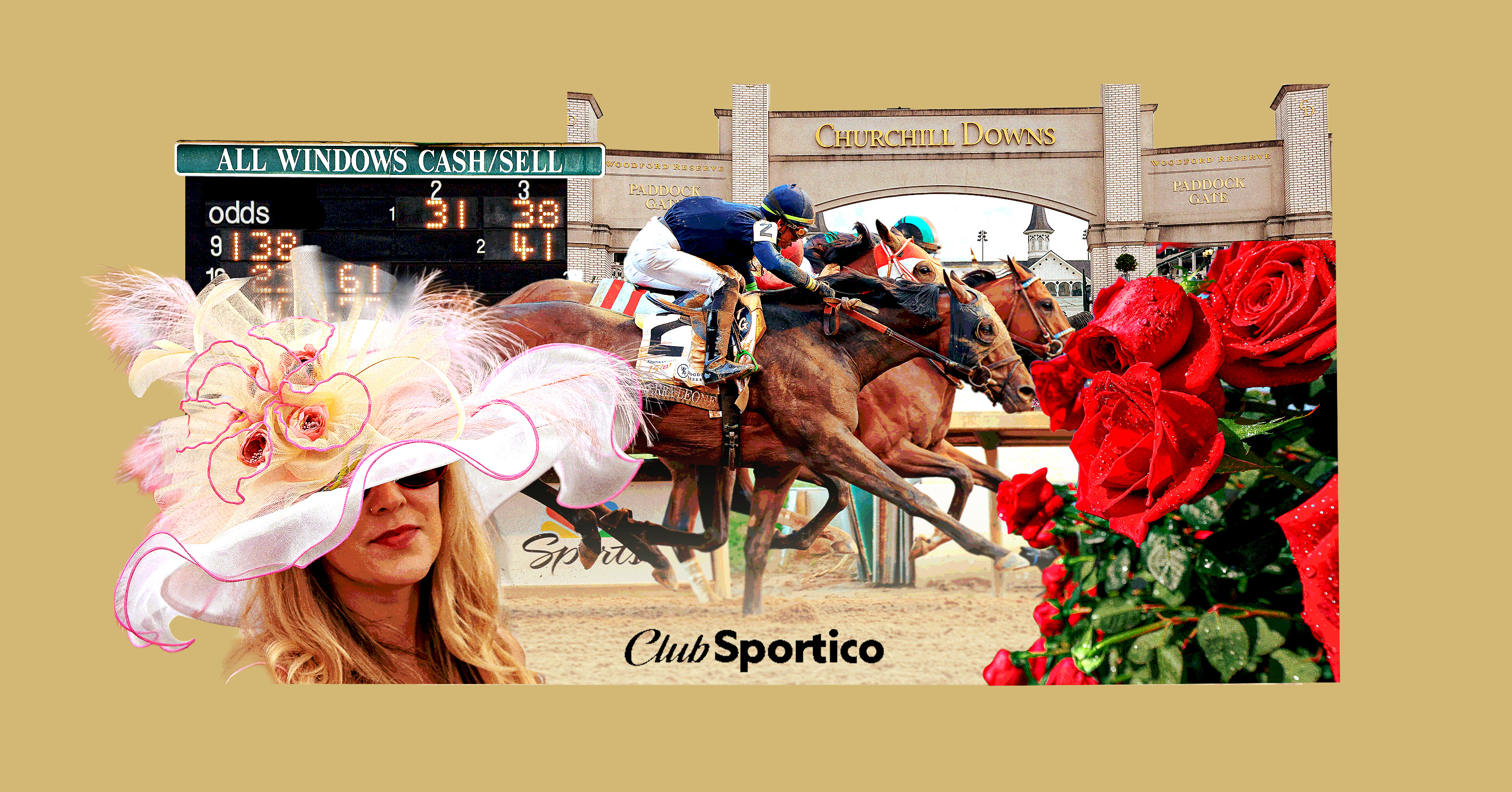
The Kentucky Derby Invented Modern Sports Spectacles
The Kentucky Derby is *still* one of America's most-watched sporting events, thanks to some marketing genius... and a stroke of betting-related luck.
Welcome back to Club Sportico, where we discuss the intersection of sports and money—with humor and opinion. Today we’re talking about horses 🏇, hats 👒and roses 🌹.
How did the Kentucky Derby become the Kentucky Derby? That story starts with explorers Lewis and Clark. Or at least the myth does.
Meriwether Lewis Clark Jr., grandson of William Clark and named for Clark’s traveling partner,1 helped create Churchill Downs in 1875, using England’s Epsom Downs as inspiration. The first Kentucky Derby was held that May, though it’d be another half-century before the race achieved lasting fame thanks to an obsessed marketer, a loose grip on tradition, and a bit of betting-related luck.
Today, sports strive to become spectacle. A game only grabs so much attention. Events are what break through. To see where leagues are headed, then, it’s worth studying how a horse race came to draw 150,000 people in Louisville and 20 million viewers on NBC year after year.
The Derby was created with the intention of being important, according to Kentucky Derby Museum senior director of curatorial education Chris Goodlett. The Civil War had just decimated the horse breeding industry and there was a need to get people interested in racing again. There were ups and downs through the race’s first few decades, but always a consistent effort to get elites— women included—to the track. An emphasis on formal attire helped the race stand out from the beginning.
In the early 1900s, progressive-era reformers from California to New York banned gambling, shifting the sport’s epicenter and shrinking the number of operating racetracks in the U.S./Canada from 355 in 1897 to 31 in 1908. In 1915, a filly won the Kentucky Derby for the first time. Maybe more importantly, Regret was owned by prominent New York businessmen Harry Payne Whitney.2
“I do not care if she never wins another race, nor if she never starts in another race, she has won the greatest race in America, and I am satisfied,” he said afterwards.
Matt Winn, Churchill Downs’ leader from 1902 until his death in 1949, had convinced Whitney to bring his horse to Kentucky and later said of that running: “the Derby was thus made an American institution.” But Winn’s marketing efforts played a big role too.
Many of the techniques he employed are still popular today. Holding concerts at the track. Woo’ing influencers, in his case the famous sportswriters of the day. Boasting about attendance figures that couldn’t easily be verified. Winn also served as a human mascot for Kentucky culture as a slightly exotic, tradition-tinted land. “It was a Disney-fied version of the idea of the Old South,” said James Nicholson, who wrote a book on how the Kentucky Derby became what it is.
Before there was Colonel Sanders, there was Colonel Winn.
He’s responsible for many of the Derby’s most famous traditions, from the playing of “My Old Kentucky Home” to the souvenir mint julep glasses to the garland of roses and gold trophy given to each Derby champ. Winn kept the race alive through war, prohibition, depression, and more war, creating a place that could simultaneously be for long-shot lovers and power-brokers. Churchill Downs celebrated the past without ever getting stuck in the mud. It was only a matter of time before it became iconic.
“All Winn talked about was Derby all the time,” Goodlett said. “It was always Derby, Derby, Derby, Derby, and ways to push the Derby.”3
Shortly after he died, TV took over evangelizing Churchill Downs. While some tracks were wary of televising events, for fear fans would stay home, the Derby leaned in. CBS carried its first race in 1952.
In 1975, ABC won the rights to air the event by promising more cameras, more commentators, and more coverage. Many were dubious when the network devoted 90 minutes to the event. On Saturday, NBC will be live from Louisville for five hours.
By the ‘80s, the Derby stood alone. “There are very few sports that the American public follows so little, but becomes so interested in for one race,” TV host Jim McKay said at the time.
Gaudy, whimsical outfits emerged around the same time. Social media has only boosted the trend. Outrageous hats and fascinators are a fairly modern obsession, seemingly driven more by hysteria around Prince William and Catherine Middleton’s 2011 royal wedding than any ties to horse racing’s distant past.
The result now is a truly odd mix of tradition and TikTokers, a sport’s pinnacle competition set amid a debaucherous circus. But one suspects Colonel Winn would approve.
“After 100-whatever years, it kind of becomes its own thing,” Nicholson said. “You can spend all day at the Derby just looking at people’s ridiculous hats and somebody with a critical eye would say, What is this? Nobody dresses like this…. But then it just becomes what one does.”
Each year, Churchill Downs briefly becomes the center of both the sporting universe and the cultural milieu, for reasons that remain somewhat incomprehensible. Marketing certainly helped. But in time, it looks more like magic.
Eben’s ⚡ Take: I went to the Masters this year for the first time, and was floored by how much the event, its participants, its media partners and its fans patrons all fully embrace the tradition. That tournament and the Kentucky Derby are in a very exclusive group of sporting events (or venues, like Wrigley Field) that seem to have kept their old-time charm amid generations of changes to how we consume and enjoy sports.
Will that list grow longer over time, or shorter? A few years ago, I would have said shorter. Now I think the opposite. People crave nostalgia, even if it nods to a time they didn’t personally experience. And if that involves dressing like a southern belle, drinking a very specific mint cocktail and learning the basics of parimutuel wagering, well that’s even better.
To that end, after the Masters we debated on the podcast whether modern sports teams could have cellphone-free sections. Am I crazy here?
Club Sportico is a community organized by Sportico, a digital media company launched in 2020 to cover the business side of sports. You can read breaking news, smart analysis, and in-depth features from Eben, Jacob and their colleagues at Sportico.com, and listen to the Sporticast podcast wherever you get your audio. Contact us at club@sportico.com.
He went by Lutie. For some reason I thought you should know that.
Who himself was married to Gertrude Vanderbilt.
It’s giving Dana White.