Netflix vs. YouTube is daytime’s hot new drama
Now starring your favorite sports podcasters???
Welcome back to Club Sportico, where we break down the intersection of sports and money—with an extra bit of humor and opinion. We’ve got a big week ahead. Aussie Open finals, the Super Bowl and oh, the Olympics! Today, we’re taking a midday break to unwind.
It’s 1 p.m. You’ve just gotten back from lunch. You sit down at your desk and it arrives: your moment of truth.
At least, that’s the language Netflix has long used1 for the point in time when you decide how you will budget your attention. Will you put ESPN on in the background? Music? Cable news? An old sitcom? Or, maybe, a podcast?2
It’s 6 p.m. You’re headed to the kitchen to begin prepping dinner. Bam! Another moment of truth.
Netflix execs used to talk about these crossroads in more limited terms. Here’s co-CEO Ted Sarandos in 2013:
The way we compete with HBO and everybody else is for attention. Internally we call it moments of truth: when you sit down on your couch and you pick up your remote, which one do you pick up, the one that controls the cable channels, or the one that streams Netflix through your TV?
Initially Netflix’s strategy was to offer the best shows on TV, creating a library of content that would retain value for years. They’d release entire series at once, knowing that once they had you in their app, there would be more for you to watch after you finished a binge. And that tactic worked. But in recent years, YouTube’s approach—lots and lots and lots of content, created by users, viewable for free—has been even more successful in terms of time captured.
In December, the Google-owned platform earned 12.7% of TV hours, according to Nielsen data, to say nothing of its control over mobile screens. Netflix came in second among streamers at 9%.
As YouTube grew, it swallowed the podcasting industry, with celebs and journalists turning their audio shows into digital series. A year ago, the company said it was the biggest podcast platform in the world. More than one billion people tune in each month for those videos. YouTube also ponied up for premium content, most significantly with NFL Sunday Ticket. In 2029, it’ll add the Oscars too. Those deals get more people using the app on their TVs, and discovering just how much other content awaits them there.
During evening hours, the gap between YouTube and Netflix is smaller. YouTube averaged 4% more primetime viewers than Netflix as of last summer, Nielsen said at the time. Daytime decisions were where it dominated.
Nowadays, singular “moments of truth” is an increasingly outdated notion. We are constantly considering what video we’ll watch next, and which app we’ll use to view it. It’s no longer just couch time companies are fighting over but also commuting minutes, toilet trips, and bedtime accompaniment.
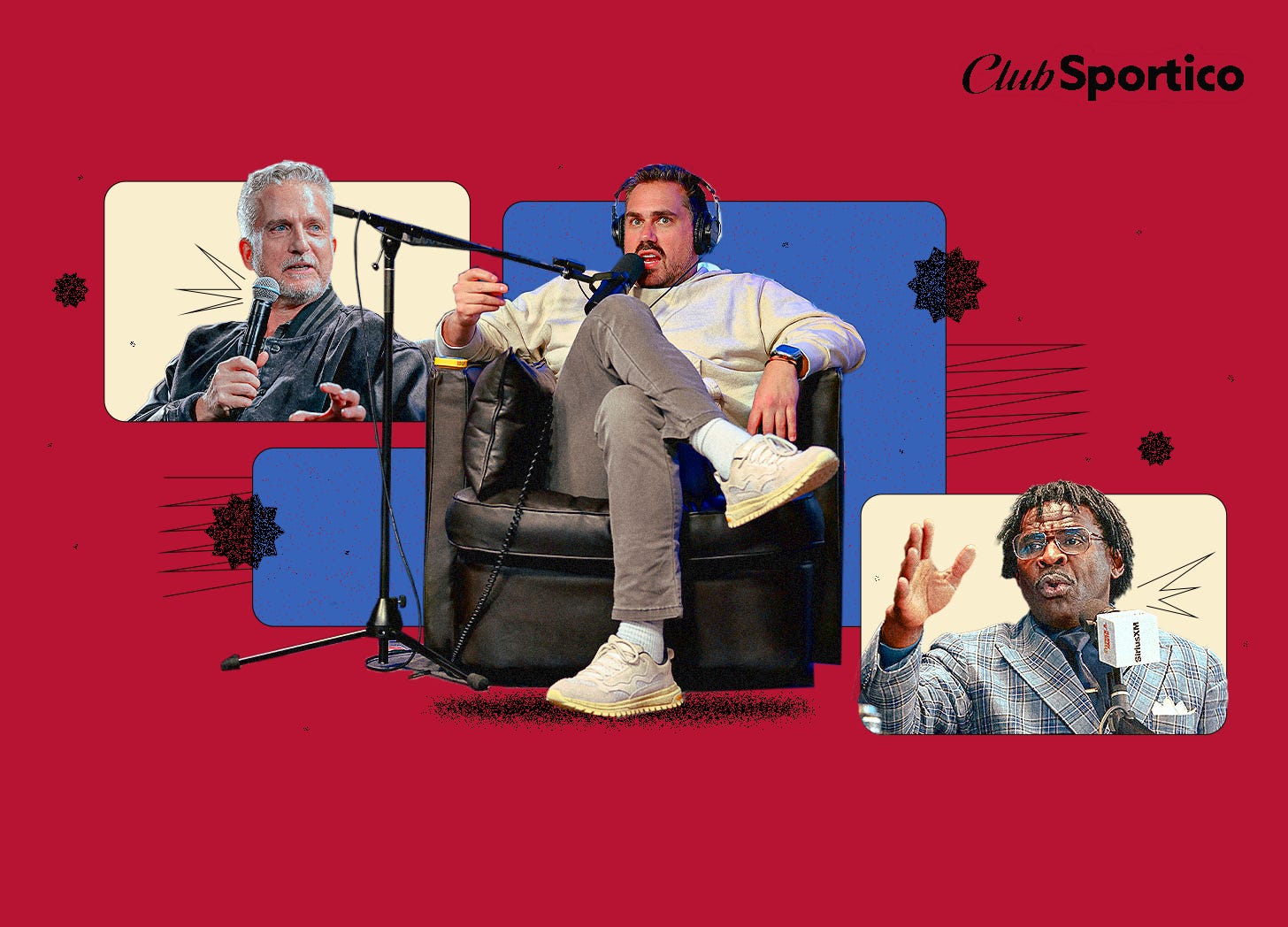
Netflix thinks Bill Simmons can help it win more of those battles. So can Big Cat.3 And Michael Irvin.4
The Bill Simmons Podcast moved to Netflix starting Jan. 11, though audio versions of the show are still available elsewhere. Pardon My Take arrived the next day with the same arrangement. Netflix has signed licensing deals with The Ringer/Spotify, iHeartMedia, and Barstool Sports for a collection of more than 30 exclusive video podcasts.
It’s adding hours and hours of relatively inexpensive content, geared towards various fan communities who already come to Netflix for entertainment. More shows are coming soon; Sarandos hinted at true crime pods on the last earnings call, for instance, in line with the success Netflix already sees in that category with its documentaries. Netflix is developing new original shows too. It’s first pair star Irvin and Pete Davidson. Those don’t have any audio-only distribution. Netflix is also working on a mobile app refresh that will likely see podcast clips come to a TikTok-like vertical video feed.
The sports voices who left YouTube’s free platform for Netflix’s paywalled garden received pushback, seemingly from their younger fans most of all.
The adults creating these shows still often view the podcast as the main product and the video feed as a nice-to-have for those who want to consume it that way. Video versions have long been thought of first as discovery tools that would drive new listeners (YouTube’s algorithm recommends more new channels than podcast players do), rather than as destinations.
But for legions of consumers who came of age after YouTube’s ascent, it’s the other way around. The video is the thing, whether or not they’re actively watching a couple people talk into microphones.5 The question now is whether those viewers will develop new habits on Netflix, or simply find new shows to watch on YouTube.
Their next moment of truth is just around the corner.
Of course, sports fans are used to this dynamic by now. Games are already fragmented across services (including Netflix and YouTube) bidding to own them exclusively. It was only a matter of time before talk shows—whatever you want to call them—would be too.
Eben’s ⚡Take: I love when Jacob breaks down what’s really happening with new age media. I’d assumed Netflix’s big sports podcast push was primarily about mobile viewing. Turns out I was wrong. Netflix is head and shoulders above all the other subscription TV streamers, why not take aim at the elephant in the next room over.
Also, at what point is a podcast just a TV show? Feels like the “Is a hot dog a sandwich?” debate of the digital media era…
On the most recent Sporticast episode6 Eben and Scott debated a hot topic at the Australian Open, where a number of star players have complained about their lack of privacy before and after matches 👇
Club Sportico is a community organized by Sportico, a digital media company launched in 2020 to cover the business side of sports. You can read breaking news, smart analysis, and in-depth features from Eben, Jacob and their colleagues at Sportico.com, and listen to the Sporticast podcast wherever you get your audio. Contact us at club@sportico.com.
Here it is in a 2013 investor letter
One more idea: procrastinate by perusing sportico.com
Pardon My Take and The Bill Simmons Podcast were No. 2 and 3 among sports pods on Spotify in terms of unique viewers. No. 1 show New Heights With Jason & Travis Kelce is owned by Amazon, the other big digital player in the battle to disrupt traditional TV.
It previously signed deals with popular YouTubers like Mark Rober (who also worked Netflix’s Skyscraper Live event) and Ms. Rachel for video content too.
Ironically the earliest podcasts were often ripped audio feeds from TV or radio programs. And around and around it goes.
Not available on Netflix—yet